Mid-Season Masterclass: Rating the 2026 Formula One Grid Performance
The 2026 Formula One World Championship has already delivered a profound shift in the sport’s competitive landscape. With technical regulations altering aerodynamic dependencies, power unit energy deployment ratios, and tire degradation curves, the burden of execution has shifted heavily back onto driver adaptability. Approaching the mid-season threshold, the grid has bifurcated into those pioneering the new mechanical era and those severely compromised by vehicular limitations or developmental stagnation.
This analytical review assesses and rates the defining performances of the year so far, examining mechanical execution, operational strategy, and raw pace.
The Frontrunners: Technical Dominance and Intra-Team Warfare
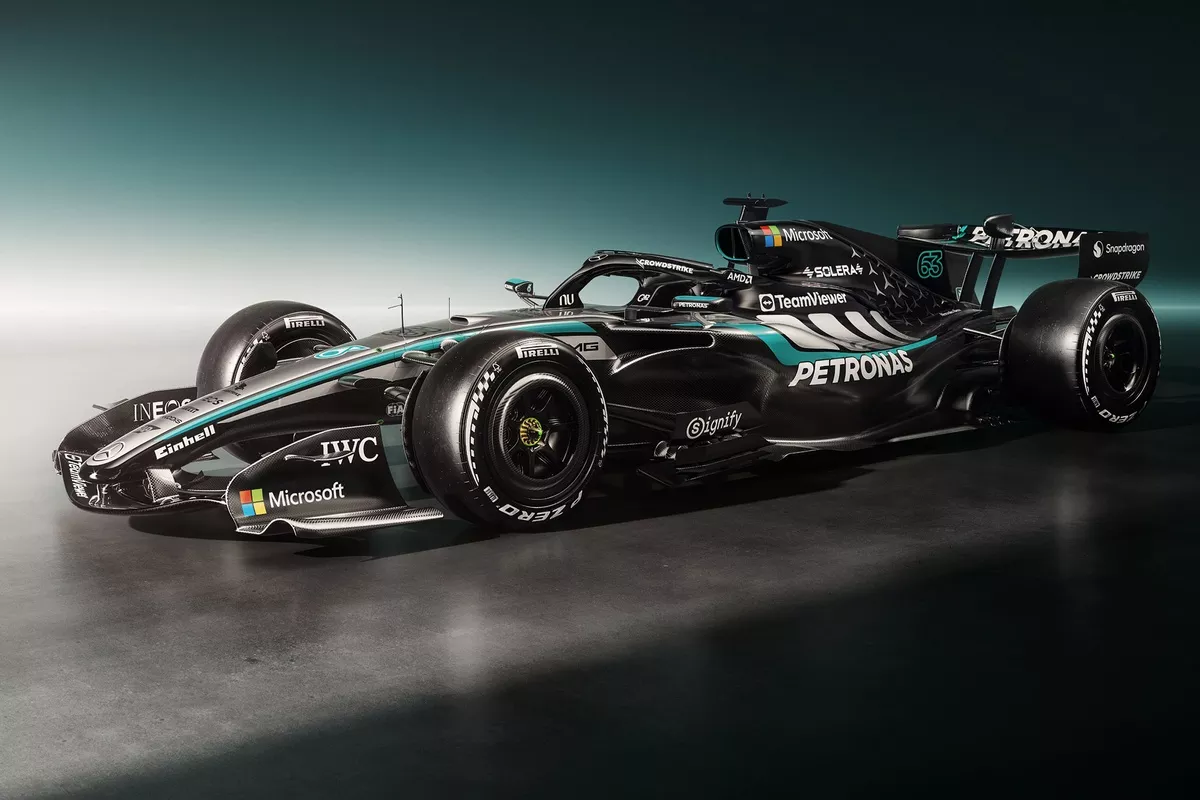
Andrea Kimi Antonelli – Mercedes AMG Petronas F1 Team
- Rating: 9.5 out of 10
- Championship Position: 1st
Entering a premier team as a rookie under a volatile regulatory framework is historically a recipe for operational exposure. Yet, Andrea Kimi Antonelli has defied standard development curves. Securing five victories in the opening sequences of the campaign, the young Italian has demonstrated a granular understanding of the complex 2026 thermal management systems.
His primary strength lies in high-speed directional changes, maximizing the mechanical grip of the Mercedes chassis without inducing micro-locking on entry. While a mechanical failure at the British Grand Prix exposed the limits of component reliability, his positioning at the summit of the standings is a testament to flawless execution under intense pressure.
George Russell – Mercedes AMG Petronas F1 Team
- Rating: 8.5 out of 10
- Championship Position: 2nd
George Russell continues to prove he is an elite qualifying specialist, frequently extracting maximum performance from the power unit packaging over a single flying lap. His race management has advanced, highlighted by his conversion of opportunities at the Red Bull Ring and a resilient recovery drive to second place at Silverstone following a costly puncture.
His deficit to his rookie teammate stems primarily from subtle variances in tire surface temperature management during prolonged stint windows. However, his technical feedback remains central to the ongoing engineering superiority displayed by the Brackley-based squad.
Lewis Hamilton – Scuderia Ferrari
- Rating: 8.5 out of 10
- Championship Position: 3rd
The high-profile transition of Lewis Hamilton to Maranello has fundamentally altered the political and tactical dynamics of Scuderia Ferrari. Adapting seamlessly to the distinct ride-height characteristics and rear-end stability preferences of the Ferrari power delivery model, the veteran champion has proven that his race execution remains top-tier.
His standout performance yielded a historic maiden victory for Ferrari this season, solidifying his third place in the drivers’ championship. Hamilton has excelled in managing heavy fuel loads during initial race phases, mitigating the front-axle scrubbing that has occasionally hindered the team’s long-run race pace.
The Challengers: Maximizing Sub-Optimal Machinery
Charles Leclerc – Scuderia Ferrari
- Rating: 8.0 out of 10
- Championship Position: 4th
Charles Leclerc has endured a highly volatile campaign characterized by extreme performance peaks and punishing operational setbacks. His exceptional car control was rewarded with a crucial victory, breaking a period of strategic frustration.
Mechanically, Leclerc remains one of the few drivers capable of overlapping braking and corner-entry phases effortlessly, a critical attribute given the unique floor-loading demands of the 2026 aero regulations. His mid-season deficit to his teammate is largely a product of compromised tire strategies and mistimed safety car windows rather than a lack of fundamental velocity.
Lando Norris – McLaren Mastercard F1 Team
- Rating: 7.5 out of 10
- Championship Position: 5th
McLaren started the year trying to resolve drag-to-downforce efficiency imbalances. Despite these aerodynamic hurdles, Lando Norris has extracted consistent top-five results. His analytical approach to power unit energy harvesting has allowed him to defend positions against theoretically faster machinery.
While the McLaren lacks the ultimate aerodynamic refinement of the Mercedes, the ability of Norris to preserve the rear tire compound across high-energy thermal circuits keeps him firmly within striking distance of the top three in the standings.
Oscar Piastri – McLaren Mastercard F1 Team
- Rating: 7.5 out of 10
- Championship Position: 6th
Oscar Piastri matches his teammate closely in sheer geometric apex speed, demonstrating remarkable maturity in high-speed combat. His mechanical adjustments inside the cockpit via wheel-dial adaptations show a deep understanding of braking migration.
His primary developmental hurdle remains long-run stint management, where slight over-driving in dirty air occasionally accelerates tire degradation profiles compared to the sister car.
The Anomalies: Champion Hurdles and Rookie Surges
Max Verstappen – Oracle Red Bull Racing
- Rating: 7.0 out of 10
- Championship Position: 7th
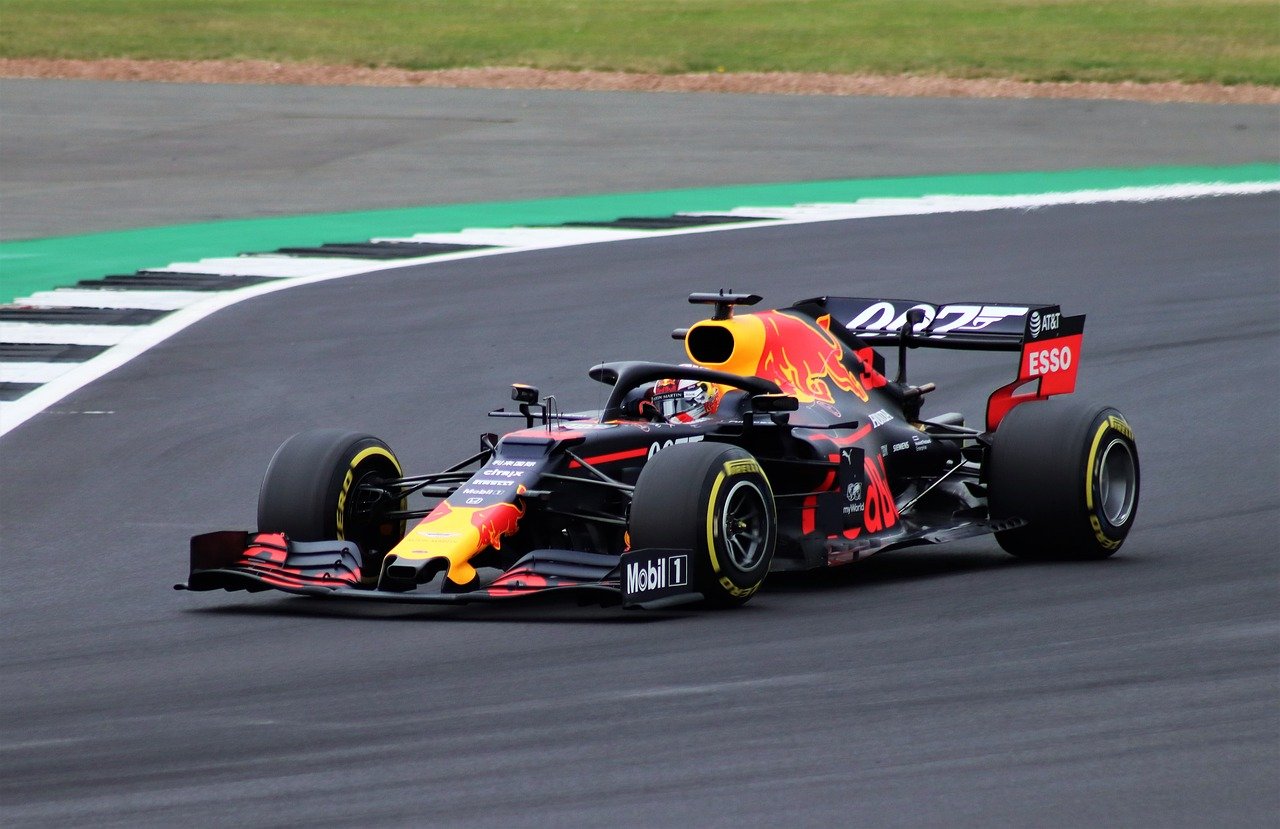
The current standings reveal an unprecedented narrative for Max Verstappen. Plagued by structural instability within the team and a severe aerodynamic imbalance caused by a sensitive front wing assembly, the reigning champion has been forced to drive beyond the physical limits of his platform.
A critical mechanical failure and subsequent crash at Silverstone underlined the volatile state of the car’s current upgrade path. Despite scoring no victories so far, his ability to drag sub-optimal machinery to 76 points demonstrates elite damage limitation, though his frustration with the mechanical compliance of the chassis is increasingly evident.
Isack Hadjar – Oracle Red Bull Racing
- Rating: 8.0 out of 10
- Championship Position: 8th
As one of the standout revelations of the freshman class, Isack Hadjar has frequently outperformed the foundational metrics of his machinery. Showing minimal hesitation when adjusting to heavy track evolution, his handling of low-speed mechanical rotation has allowed him to secure crucial points finishes. Outperforming seasoned veterans in midfield machinery, he has validated the intensive driver development program that fast-tracked his entry into the sport.
Pierre Gasly – BWT Alpine F1 Team
- Rating: 7.5 out of 10
- Championship Position: 9th
Operating within an Alpine team that spent the early months searching for structural stiffness in the chassis, Pierre Gasly has delivered a series of clinical, unsung performances. His point haul keeps Alpine relevant in the midfield battle. Gasly has relied on disciplined brake-pressure modulation to overcome low-speed understeer characteristics, making him one of the most efficient midfield operators on the grid.
Liam Lawson – Visa Cash App Racing Bulls F1 Team
- Rating: 7.0 out of 10
- Championship Position: 10th
Liam Lawson has firmly established his credentials as a reliable asset in high-stress track scenarios. The Racing Bulls package has fluctuated in downforce consistency across different ambient track temperatures, yet Lawson has shown a calculated approach to defensive race craft. His ability to hit precise apex targets under heavy fuel loads has repeatedly neutralized threats from cars possessing superior straight-line velocity.
Mid-Field Consolidation and Back-Grid Struggles
The lower half of the grid highlights the severe penalties imposed by the 2026 regulations on teams failing to optimize weight distribution. In the lower midfield:
- Arvid Lindblad has shown flashes of immense developmental speed for Racing Bulls, though raw consistency over full race distances remains a work in progress.
- Oliver Bearman has optimized the limited aerodynamic capabilities of the Haas platform, delivering precise performances to secure critical lower-tier points.
- Franco Colapinto has adapted effectively to the challenging handling traits of the Alpine, matching his teammate’s operational outputs during chaotic, weather-affected sessions.
Conversely, established champions like Fernando Alonso have found their campaigns entirely derailed by architectural flaws in their machinery. The Aston Martin platform has failed to achieve stable airflow detachment over the rear venturi tunnels, leaving its drivers virtually defenseless on high-speed straights.
Similarly, Nico Hülkenberg and the Audi project continue to seek functional baseline correlation between wind-tunnel data and actual track telemetry, leaving them adrift of the point-scoring structures alongside the struggling Cadillac pairing of Sergio Pérez and Valtteri Bottas.
Mid-Season Technical Summary Table
| Driver | Team | Points | Technical Highlight |
| Andrea Kimi Antonelli | Mercedes | 179 | Thermal Management & Corner-Entry Efficiency |
| George Russell | Mercedes | 154 | Single-Lap Power Unit Optimization |
| Lewis Hamilton | Ferrari | 147 | Front-Axle Energy Preservation |
| Charles Leclerc | Ferrari | 108 | Brake Migration Control & Apex Speed |
| Lando Norris | McLaren | 97 | MGU-K Energy Deployment Strategy |
| Oscar Piastri | McLaren | 82 | High-Speed Mechanical Balance |
| Max Verstappen | Red Bull | 76 | Dynamic Damage Limitation |